

The Distinction Between Witch-Ology and Alchemy
Witch-Ology and Alchemy are two unique practices that are often conflated due to their historical connections to magic and the occult. Witch-Ology, commonly known as witchcraft, encompasses a diverse array of practices, beliefs, and traditions. It involves the use of spells, rituals, and herbal remedies to tap into natural energies and influence the world around us. This practice is deeply rooted in folklore and emphasizes the practitioner's connection to nature, focusing on personal empowerment and spiritual growth.
In contrast, Alchemy is a philosophical and proto-scientific tradition that traces its origins back to ancient times, primarily concerned with the transformation of matter. Alchemists aimed to transmute base metals into gold and sought the Elixir of Life, a legendary substance believed to grant immortality. While Alchemy incorporates mystical elements, its core lies in the pursuit of knowledge, experimentation, and understanding the material world.
In summary, although both Witch-Ology and Alchemy involve themes of transformation and mysticism, Witch-Ology is primarily centered on personal and spiritual practices, whereas Alchemy focuses on the transformation of physical substances and the quest for scientific insight. Recognizing these distinctions can illuminate their unique roles in history and contemporary spiritual practices.
Why The Alchemy Academy Merged with The Witch-Ology Institution
The recent merger between The Alchemy Academy and The Witch-Ology Institution marks a significant milestone in the world of magical education. This decision was driven by a shared vision to create a more comprehensive curriculum that combines the strengths of both institutions. By merging, the two academies aim to enhance the learning experience for students, offering a wider range of courses that cover both alchemical practices and witchcraft traditions. This collaboration not only allows for resource sharing but also fosters a diverse community of practitioners from different magical backgrounds. Together, they can innovate and improve teaching methods, making magic education more accessible and engaging. Furthermore, the merger opens up opportunities for joint research projects and community outreach programs, ultimately benefiting both students and the wider magical community. In essence, this partnership is about uniting knowledge and expertise to prepare the next generation of magical practitioners for a world that increasingly values interdisciplinary approaches to learning.
Witchcraft vs Wicca: Understanding the Differences
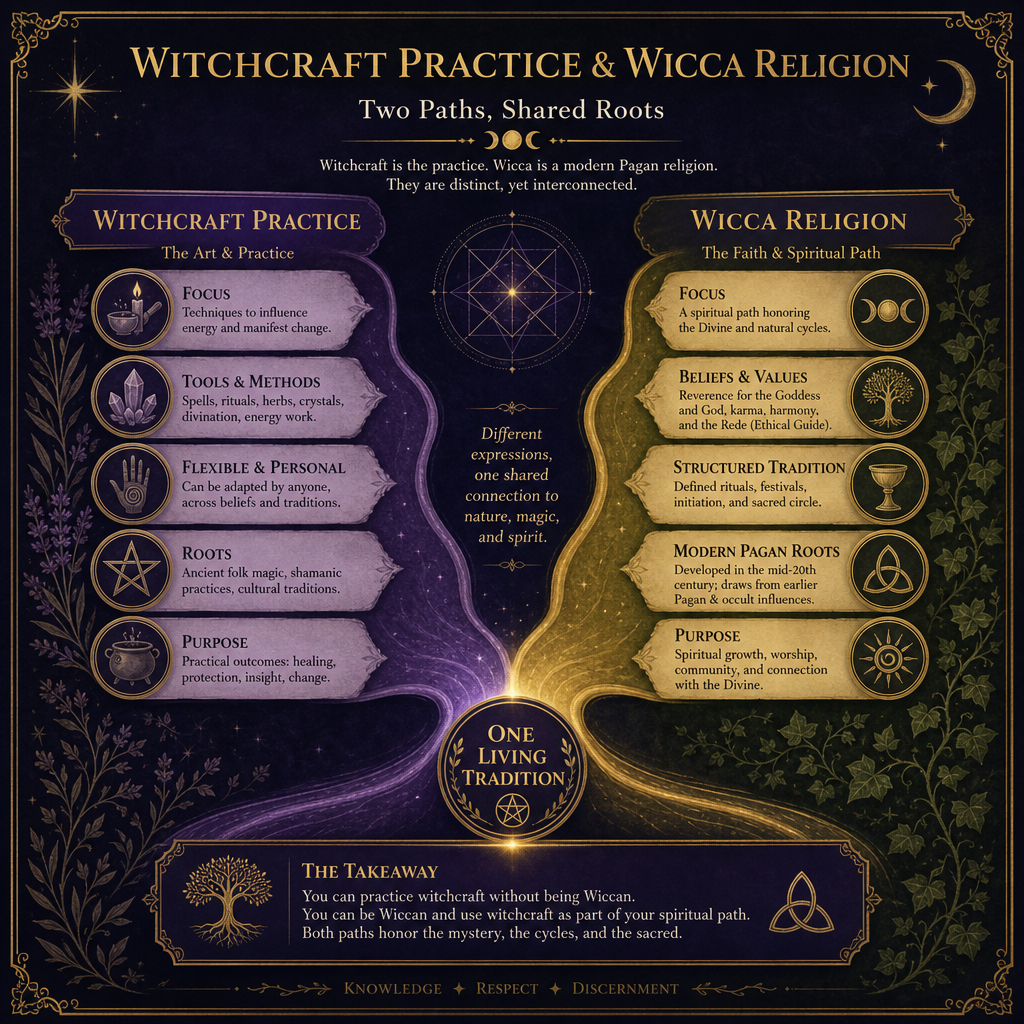
Witchcraft and Wicca are often used interchangeably in casual discussions, yet they represent distinct practices and belief systems. Witchcraft is a broad term that encompasses a diverse range of practices involving magic, spells, and rituals. It can be practiced by individuals who may not adhere to a specific religious framework or organized belief system. In contrast, Wicca is a modern pagan religion that incorporates witchcraft as a core aspect of its spiritual practice. Established in the mid-20th century, Wicca emphasizes the worship of nature, reverence for deities, and the celebration of seasonal festivals that honor the earth's changing cycles. While all Wiccans may engage in witchcraft as part of their spiritual journey, not all practitioners of witchcraft identify as Wiccan or subscribe to its specific beliefs.
Witchcraft includes various traditions, such as folk magic, ceremonial magic, and eclectic practices, each with its own beliefs, rituals, and methods. It often focuses on the practitioner's intent and the tangible outcomes of their magical workings. Conversely, Wicca is structured around specific rituals, ethical guidelines, and a community-oriented approach that fosters connections among practitioners. Wiccans typically adhere to the Wiccan Rede, which promotes the principle of "an it harm none, do what ye will," emphasizing personal responsibility and the ethical application of magic in their lives.
In summary, while both witchcraft and Wicca involve magical practices and the exploration of spiritual realms, they differ significantly in their underlying philosophies, beliefs, and frameworks. Witchcraft serves as a general term for various magical practices accessible to anyone, whereas Wicca is a specific religion that integrates witchcraft within its broader spiritual context.